

Your complete, week-by-week guide to crossing your first marathon finish line — safely, confidently, and without burning out.
By Matt Renner, Lead Editor | Last Updated: 2026 | 16 min read
I bonked spectacularly at mile 19 of my first marathon. Not just a slow fade either, I almost came to a full stop. I had gone out 45 seconds per mile too fast, skipped two gel stations because I felt great, and paid for it in a way I still think about years later. I barely finished with a timing of 4:48. My second marathon in the same year was 4:02. Same body, better plan. That’s what this guide is about.
This 16-week marathon training plan is designed specifically for beginners: runners who can already run 3 to 4 miles comfortably and are ready to take the leap to their first marathon. It builds your mileage gradually, includes built-in recovery weeks, and takes you all the way to a 20-mile long run before race day. I’ve tested versions of this structure with a dozen first-timers over the past few years — the approach works, but only if you actually respect the easy days.
By the time you toe the start line, you won’t just be ready — you’ll be confident.
Who This Plan Is For
✓ You can comfortably run 3–4 miles without stopping
✓ You have 5–6 hours per week to train
✓ This will be your first marathon (or your first in several years)
✓ You want a sustainable, injury-preventing approach

What to Expect From This 16-Week Plan
Sixteen weeks is widely considered the sweet spot for first-time marathon training. It gives your body enough time to adapt to increasing mileage without rushing the process, which is how most beginner runners get injured.
The plan is divided into four distinct phases:
- Weeks 1–4: Base Building. You’ll establish a consistent running routine, cap long runs at 8 miles, and train your body to handle time on your feet.
- Weeks 5–8: Build Phase 1. Mileage increases steadily. Week 8 is a planned recovery week — easier than it sounds, but essential for preventing injury.
- Weeks 9–13: Build Phase 2 + Peak. This is where the real training happens. You’ll hit your longest runs — up to 20 miles — two to three weeks before the race.
- Weeks 14–16: Taper. You’ll reduce mileage significantly to arrive at the start line fresh, rested, and ready to run your best race.
The Complete 16-Week Marathon Training Schedule
Below is your full training calendar. ‘Easy’ means a conversational pace — you should be able to hold a full sentence without gasping. Never sacrifice easy day pacing for speed; those miles are building your aerobic engine.
| Week | Phase | Mon | Tue | Wed | Thu | Fri | Sat | Sun | Total Miles |
|---|---|---|---|---|---|---|---|---|---|
| 1 | Base Building | Rest | 3 mi easy | Rest | 3 mi easy | Rest | 5 mi long | Cross/Rest | 11 |
| 2 | Base Building | Rest | 3 mi easy | Rest | 3 mi easy | Rest | 6 mi long | Cross/Rest | 12 |
| 3 | Base Building | Rest | 4 mi easy | Rest | 4 mi easy | Rest | 7 mi long | Cross/Rest | 15 |
| 4 | Base Building | Rest | 3 mi easy | Rest | 3 mi easy | Rest | 8 mi long | Cross/Rest | 14 |
| 5 | Build 1 | Rest | 4 mi easy | 3 mi easy | 4 mi easy | Rest | 9 mi long | Cross/Rest | 20 |
| 6 | Build 1 | Rest | 5 mi easy | 3 mi easy | 5 mi easy | Rest | 10 mi long | Cross/Rest | 23 |
| 7 | Build 1 | Rest | 5 mi easy | 4 mi easy | 5 mi easy | Rest | 11 mi long | Cross/Rest | 25 |
| 8 | Recovery | Rest | 4 mi easy | Rest | 4 mi easy | Rest | 9 mi long | Rest | 17 |
| 9 | Build 2 | Rest | 5 mi easy | 4 mi easy | 5 mi easy | Rest | 13 mi long | Cross/Rest | 27 |
| 10 | Build 2 | Rest | 5 mi easy | 5 mi easy | 5 mi easy | Rest | 15 mi long | Cross/Rest | 30 |
| 11 | Build 2 | Rest | 6 mi easy | 5 mi easy | 6 mi easy | Rest | 17 mi long | Cross/Rest | 34 |
| 12 | Peak | Rest | 6 mi easy | 5 mi easy | 6 mi easy | Rest | 18 mi long | Cross/Rest | 35 |
| 13 | Peak | Rest | 6 mi easy | 5 mi easy | 6 mi easy | Rest | 20 mi long | Cross/Rest | 37 |
| 14 | Taper 1 | Rest | 5 mi easy | 4 mi easy | 4 mi easy | Rest | 14 mi long | Rest | 27 |
| 15 | Taper 2 | Rest | 4 mi easy | 3 mi easy | 3 mi easy | Rest | 10 mi long | Rest | 20 |
| 16 | Race Week | Rest | 3 mi easy | 2 mi easy | Rest | Rest | 2 mi shakeout | RACE DAY 🏁 | 7 + 26.2 |
💡 How to Read This Schedule
Easy = Conversational pace. You should be able to speak full sentences.
Cross = Low-impact cross-training: cycling, swimming, yoga, or elliptical.
Rest = Complete rest. Do not substitute runs on rest days.
Long run = Your most important workout each week. Never skip it.
The 5 Rules Every Beginner Must Follow
1. Run your easy days truly easy
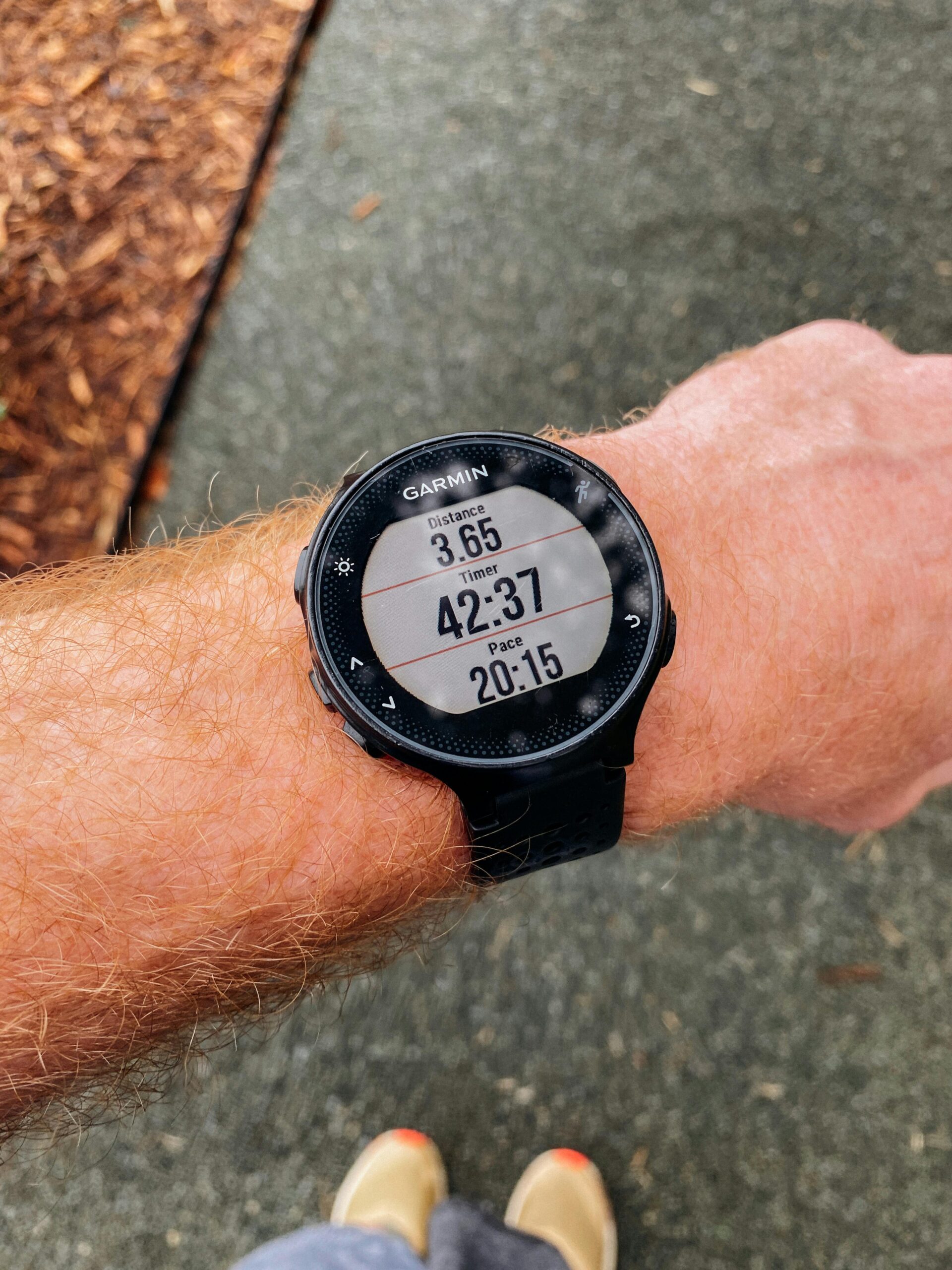
The single biggest mistake beginner marathon runners make is running easy days too fast. Your easy runs should feel almost embarrassingly slow. If you can’t hold a conversation, slow down. Running at an easy effort builds aerobic capacity without creating excess fatigue, saving your legs for your long runs and quality workouts. I’ve found that most beginners are running their “easy” days anywhere from 60 to 90 seconds per mile too fast. If your GPS watch shows easy runs and long runs at roughly the same pace, something is wrong. The Garmin Forerunner 255 makes this easy to track with its heart rate zones, aim to stay in Zone 2 on easy days and you won’t go wrong most of the time!
2. Never skip the long run
Your weekly long run is the cornerstone of marathon training. It conditions your legs for extended time on your feet, teaches your body to burn fat for fuel, and builds the mental toughness you’ll need on race day. If you have to miss a workout due to life or minor illness, try to make it the easy midweek run rather than the long run. Switch them up here and there if your schedule calls for it!
3. Respect recovery weeks
Week 4 and Week 8 are built-in recovery weeks where mileage drops. These are not optional. Recovery is when your body actually adapts and gets stronger. Skipping them to add more miles is a fast track to injury and burnout, two things that will derail your training far more than a light week.
4. Fuel and hydrate on long runs
Once your long runs exceed 60–75 minutes, you need to take on fuel mid-run. Practice with energy gels, chews, or real food on your training long runs. Never try anything new on race day! Aim for 30–60 grams of carbohydrates per hour during long efforts, and drink to thirst rather than forcing fluids. I personally find Maurten gels worth the premium price for stomach-sensitive runners. GU is fine and widely available at aid stations, but I’ve seen more GI issues with GU on hot days than with Maurten. If budget is a concern, Spring Energy real-food pouches are an underrated option that most runners overlook entirely.
5. Listen to your body
The plan is a guide, not a contract. If you feel genuine pain (not just muscle soreness), take an extra rest day. Shin splints, IT band pain, and runner’s knee are all manageable if caught early. Pushing through sharp or persistent pain will turn a minor issue into a training-ending injury. When in doubt, rest.
Essential Gear for Your First Marathon
You don’t need expensive gear to train for a marathon — but you do need the right gear. The wrong shoes or skipping body glide on a 20-miler will make your training miserable.

- Running shoes: The most important investment you’ll make. Visit a running specialty store for a proper gait analysis. Replace them every 300–500 miles. For a 16-week plan, you may need two pairs.
- GPS running watch: Tracks pace, distance, and heart rate. Essential for keeping your easy days truly easy and monitoring long run progress. A mid-range watch is more than sufficient for beginners.
- Anti-chafe balm: Body Glide or Vaseline on thighs, underarms, and nipples. Sounds minor until mile 18 without it. Non-negotiable on long runs.
- Running socks: Moisture-wicking, seamless socks designed for running. Cotton socks cause blisters. Technical running socks are a small investment that makes a huge difference on long runs.
- Energy gels or chews: You’ll want these for any long run over 75 minutes. Popular options include GU, Maurten, and Spring Energy. Each runner’s stomach responds differently, test early instead of experimenting during the race day.
Nutrition: What to Eat During Marathon Training
Marathon training burns a significant number of calories, much more than most beginners expect. Under-eating is a common mistake that leads to fatigue, poor recovery, and increased injury risk. This is not the time to diet aggressively!
Day-to-Day Nutrition
Focus on whole foods: lean proteins (chicken, fish, eggs, legumes), complex carbohydrates (oats, brown rice, sweet potatoes, whole grain bread), healthy fats (avocado, nuts, olive oil), and plenty of vegetables. Aim to eat within 30–45 minutes of finishing every run to kickstart recovery.
Pre-Long Run Fueling
Eat a carbohydrate-focused meal 2–3 hours before long runs. A bagel with peanut butter, oatmeal with banana, or toast with eggs are classic choices. Avoid high-fiber or high-fat foods the morning of a long run — your stomach will thank you at mile 15.
Carb Loading (Race Week)
During the final 2–3 days before the race, increase your carbohydrate intake to top off glycogen stores. Pasta, rice, potatoes, and bread are your friends. Keep fat and fiber lower than usual. Drink plenty of water and include some sodium (electrolytes) to help your body retain fluids.
Race Day Strategy for First-Time Marathoners
The most common mistake at a first marathon is going out too fast. The energy of the race, the crowd, and months of built-up anticipation will tempt you to run the first miles faster than planned. Resist it entirely.
⚠️ The Golden Rule: Start Slower Than You Think You Need To
A good target for a first marathon is to run the first half about 1–2 minutes per mile slower than your goal pace. Miles 1–6 should feel almost boringly easy.
The marathon doesn’t truly start until mile 18. Save something for it.
Race Day Hour-by-Hour Checklist
- 3 hours before: Wake up. Eat your practiced pre-race meal. Drink 16–20 oz of water. Lay out your gear — nothing new on race day.
- 90 minutes before: Arrive at the race venue. Check bag, find your starting pen, use the restroom (lines are long — go early).
- 30 minutes before: Light warmup walk. Take your first gel or fuel if your stomach allows. Position yourself in the correct starting pen.
- Miles 1–6: Easy and controlled. You should feel like you’re holding back. You are. That’s correct.
- Miles 7–18: Settle into race pace. Take gels every 45–60 minutes. Drink at every aid station — water or sports drink, whichever you practiced.
- Miles 19–26.2: This is where your training pays off. Break the race into small segments. Run to the next mile marker. Use the crowd. Finish strong.
Frequently Asked Questions
How many miles per week does this marathon training plan require?
The plan starts at 11 miles per week and peaks at approximately 37 miles per week in week 13. Most weeks during the build phase fall between 20 and 30 miles. This is deliberately conservative for a beginner plan, just enough to prepare you for 26.2 miles without overwhelming a runner new to high mileage.
Do I need to run a 20-mile long run before the marathon?
Yes, and this plan includes it in week 13. The 20-miler is an important confidence milestone that tells your body and your brain that you can handle marathon distance. Some beginner plans cap long runs at 18 miles. Both approaches work, but the 20-miler gives most beginners a stronger mental edge going into race day.
What if I miss a week of training?
Missing one week due to illness, travel, or life is not a disaster. Simply pick up where you left off. Do not try to make up missed miles by doubling up in the following week. If you miss two or more weeks during the peak training period, assess how far out the race is and consider whether the date is still realistic.
How do I know if I’m running at an easy pace?
The simplest test is the talk test: if you can hold a full, comfortable conversation without gasping, you’re running easy. If you use a GPS watch with heart rate, aim to stay in Zone 2 (roughly 60–70% of your maximum heart rate) on easy days. For most beginners, this feels uncomfortably slow at first and that’s normal.
What is the best marathon for a first-timer in the US?
Several US marathons are well-regarded for beginners, but I’ll give you my actual ranking rather than the standard list. Chicago is the widely-regarded as the best first marathon in America. It’s dead flat, has aid stations every mile, and the crowd on Michigan Avenue in the final stretch will carry you home whether your legs want to or not. New York is spectacular but save it for your second or third marathon; the bridges and hills in the second half punish underprepared runners more than any other major. The Marine Corps Marathon in Washington D.C. is chronically underrated by many. No entry fee, incredible crowd support, and a nice finish at the Iwo Jima Memorial. If you want a PR-friendly course without the lottery headache, the Revel series (Big Cottonwood, Mt. Charleston) offers massive net downhill courses that are legal for Boston Qualifying times and some of the best value in the sport.
Can I walk during a marathon?
Absolutely. Many experienced marathoners use planned walk breaks as a strategy, famously popularized by running coach Jeff Galloway. Taking 30–60 second walk breaks at each aid station can significantly reduce fatigue and help you negative split (run the second half faster than the first). Finishing a marathon is the goal; how you get there is up to you.
What should I wear on race day?
Wear only gear you have tested extensively in training. This includes shoes (with at least 50–100 miles on them), socks, shorts or tights, shirt, and any accessories like a hat or gloves. Race morning is not the time to debut new gear. Apply anti-chafe balm liberally, pin your bib on the night before, and bring a throwaway layer if the start temperature is cold.
You’ve Got This!
Finishing a marathon changes the way you see yourself. I know that sounds like a bumper sticker, but I mean it practically: you will solve problems on your long runs (bad days, bad weather, bad legs) and every time you do, you build the mental infrastructure to solve problems on race day. The runner who bonked at mile 19 on their first attempt and the runner who negative-split their second one were the same person with different preparation. The 16 weeks between now and race day are going to be challenging, and some training runs will feel hard. That’s the point. Every mile you log, every early morning you show up, every long run you complete is a deposit in the bank for race day.
Follow the plan, respect the recovery weeks, dial in your nutrition, and trust the process. The training works and when you cross that finish line for the first time, you’ll understand exactly why so many of us come back to do it again.
Good luck and see you at the finish line!

About the Author
Matt Renner is the lead editor at Race Pace Review and has been running competitively for over 15 years. He’s completed dozens of marathons since then and he loves diving deep into training data to find out what lead to any of his marginal gains. When he’s not running or analyzing his Garmin stats, he’s probably tinkering with his bike or planning his next race.