
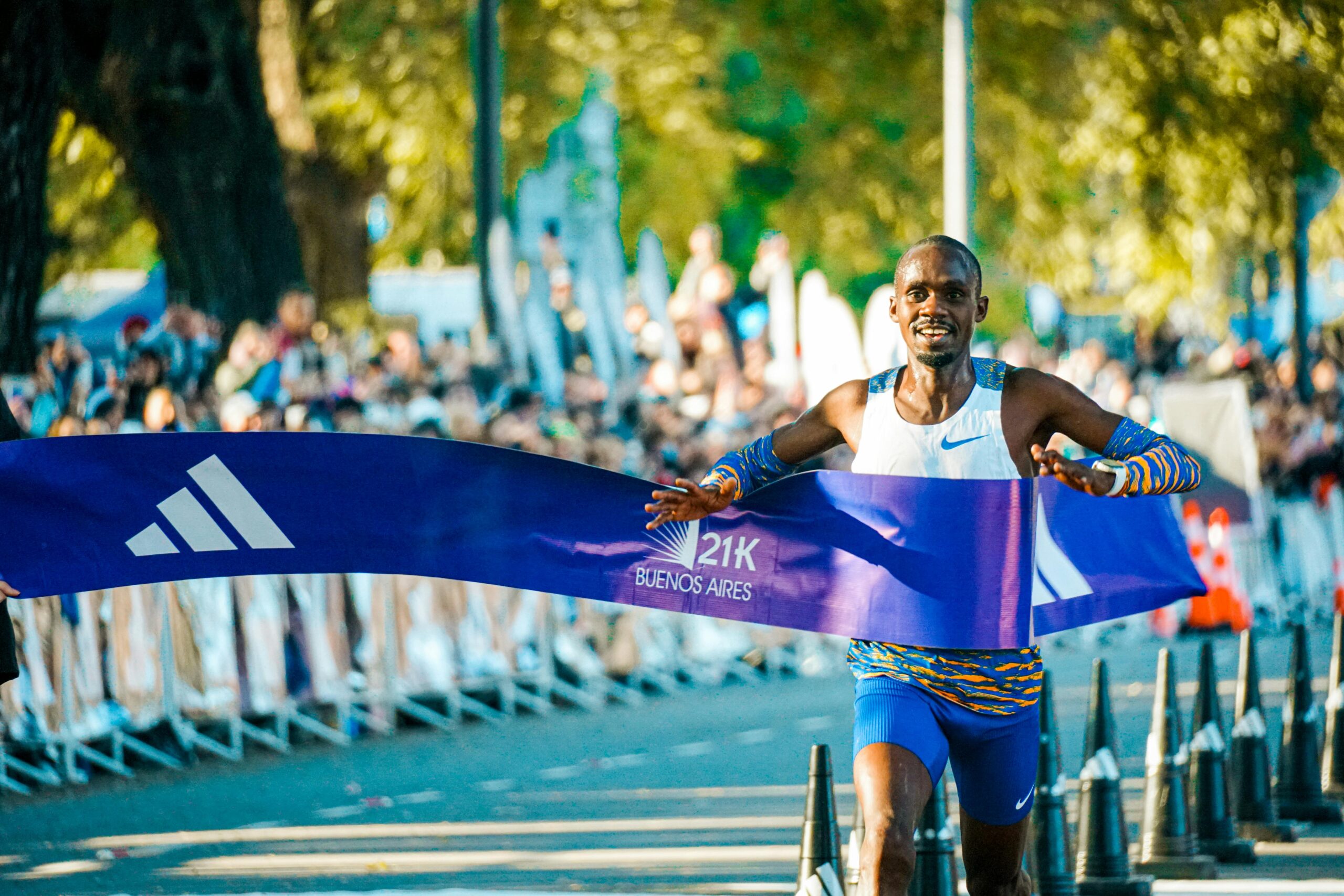
A structured, realistic 12 week plan designed to get first time runners to the half marathon finish line without injury or burnout.
By Matt Renner, Lead Editor | Last Updated: 2026 | 14 min read
I ran my first half marathon in 1:52, which felt like a solid accomplishment at the time, though I know plenty of people finish faster and plenty finish slower. What mattered more than the time was that I showed up to the start line properly trained, ran the race I planned to run, and crossed the finish line feeling tired but not destroyed. That outcome doesn’t happen by accident, it happens because you follow a structured training plan that respects your current fitness level and gives your body time to adapt.
This 12 week half marathon training plan is written for runners who have a base level of fitness (meaning you can comfortably run 3 to 4 miles without stopping) and you’re ready to commit to running four days per week for the next three months. It’s not a plan for someone who has never run before, and it’s not a plan for experienced runners chasing a PR. It’s for people running their first half marathon who want to finish strong and enjoy the experience rather than suffer through it.
If that sounds like you, this plan will get you there.

Who This Plan Is For
✓ You can run 3 to 4 miles comfortably without walking
✓ You have 12 weeks before your target race
✓ You can commit to 4 runs per week (plus optional cross training)
✓ This will be your first half marathon or your first in several years
Why 12 Weeks Is the Right Timeline for a First Half Marathon
Twelve weeks gives you enough time to build your long run from 4 miles to 12 miles without rushing the process, which is how beginners get injured. It also gives you enough variety in your training to include a few different types of runs beyond just easy mileage, which makes you a better runner and keeps training from getting stale. Shorter plans exist, and they work for some people, but they tend to ramp mileage aggressively, and aggressive mileage increases are the number one predictor of injury in beginner runners. Longer plans also exist, but most people don’t need 16 weeks to prepare for a half marathon unless they’re starting from zero.
The structure is straightforward. You’ll run four days per week, with three runs at moderate distances and one long run that gradually increases in length. You’ll also do one tempo run per week, which is a sustained effort at a comfortably hard pace, because tempo runs are particularly valuable when your weekly mileage is limited and you need to get the most training stimulus out of the time you have. The other runs are easy effort, meaning you should be able to hold a conversation while running, and the long run builds from 5 miles in week one to 12 miles in week ten before tapering down for race week.
By the end of week ten, you’ll have run 12 miles in a single session, and race day will feel more like a victory lap than a leap into the unknown.
The Complete 12 Week Training Schedule
Below is your full training calendar. Days are labeled by workout type, not specific days of the week, so you can adjust the schedule to fit your life. Most people run Tuesday, Thursday, Saturday, and Sunday, but Monday, Wednesday, Friday, and Sunday works just as well. The key is consistency and spreading your runs throughout the week rather than cramming them all into three consecutive days.
| Week | Run 1 (Easy) | Run 2 (Tempo) | Run 3 (Easy) | Run 4 (Long Run) | Weekly Miles |
|---|---|---|---|---|---|
| 1 | 3 miles easy | 3 miles tempo | 3 miles easy | 5 miles long | 14 |
| 2 | 3 miles easy | 4 miles tempo | 3 miles easy | 6 miles long | 16 |
| 3 | 4 miles easy | 4 miles tempo | 4 miles easy | 7 miles long | 19 |
| 4 | 3 miles easy | 3 miles tempo | 3 miles easy | 5 miles long | 14 |
| 5 | 4 miles easy | 5 miles tempo | 4 miles easy | 8 miles long | 21 |
| 6 | 4 miles easy | 5 miles tempo | 4 miles easy | 9 miles long | 22 |
| 7 | 4 miles easy | 6 miles tempo | 4 miles easy | 10 miles long | 24 |
| 8 | 3 miles easy | 4 miles tempo | 3 miles easy | 6 miles long | 16 |
| 9 | 4 miles easy | 6 miles tempo | 4 miles easy | 11 miles long | 25 |
| 10 | 5 miles easy | 6 miles tempo | 5 miles easy | 12 miles long | 28 |
| 11 | 4 miles easy | 5 miles tempo | 4 miles easy | 8 miles long | 21 |
| 12 | 3 miles easy | 3 miles easy | 2 miles shakeout | RACE: 13.1 miles | 21 |
💡 How to Read This Schedule
Easy runs = Conversational pace. You should be able to speak in full sentences. If you’re gasping, slow down.
Tempo runs = Comfortably hard. Faster than easy, but sustainable for the entire distance. You could speak a few words but not hold a conversation.
Long runs = Easy pace for the full distance. These are not race pace runs, they’re time on your feet at low intensity.
Rest days = At least 3 rest days per week. You can do easy cross training (cycling, swimming, yoga), but do not run.
The 7 Rules That Will Get You to the Finish Line
1. Run your easy days truly easy
This is the single most violated rule in beginner training, and it’s the one that causes the most fatigue and injury. Your easy runs should feel almost embarrassingly slow, slow enough that you could carry on a full conversation without gasping for air. If you’re running with a GPS watch, your easy pace is probably 60 to 90 seconds per mile slower than your tempo pace, and that’s correct. Most beginners run their easy days too hard because it feels unnatural to go that slow, but easy running is what builds your aerobic base and allows your body to recover between harder efforts. Without proper easy days, you’ll arrive at your tempo runs and long runs already tired, which defeats the purpose of structured training.
2. Tempo runs are essential when weekly mileage is limited
A tempo run is a sustained effort at a pace that’s faster than easy but slower than race pace, typically something you could hold for 30 to 60 minutes if you had to. The purpose of a tempo run is to improve your lactate threshold, which is the point at which your body starts accumulating more lactic acid than it can clear. When your lactate threshold improves, you can run faster for longer before fatiguing. For runners who are only logging 20 to 25 miles per week, tempo runs give you a bigger training stimulus than you’d get from just adding more easy miles. They teach your body to sustain a harder effort, which is exactly what you’ll need to do on race day when you’re holding a pace for 13.1 miles. If you had unlimited time and could run 50 miles per week, you could skip tempo runs and build fitness through sheer volume, but most first time half marathoners don’t have that luxury, so tempo runs become essential.
3. The long run is sacred
Your weekly long run is the cornerstone of half marathon training. It conditions your legs for extended time on your feet, teaches your body to burn fat for fuel once glycogen stores start depleting, and builds the mental toughness required to keep moving when you’re tired. If you have to miss a workout during the week due to life, work, or minor illness, skip an easy run or a tempo run, but do not skip the long run unless you’re injured or sick enough that running would make things worse. The long run is what prepares you for race day more than anything else in the plan.
4. Respect recovery weeks
Week 4 and week 8 are intentional recovery weeks where mileage drops significantly compared to the previous week. These are not optional, and they’re not a sign that the plan is being conservative. Recovery weeks are when your body actually adapts to the training load you’ve been putting on it. If you skip recovery weeks and just keep piling on mileage, you’ll either get injured or burn out mentally before race day. The plan is designed to stress your body for two to three weeks, then give it a lighter week to absorb that stress and come back stronger. Trust the process.
5. Fuel your long runs properly
Once your long runs exceed 75 to 90 minutes, you need to take on carbohydrates during the run, not just before. Energy gels, chews, or real food all work, but you need to practice with them in training, not on race day. Aim for 30 to 60 grams of carbohydrates per hour during long efforts, which usually means one gel or a handful of chews every 45 to 60 minutes. Your body can only store enough glycogen for about 90 minutes of running at moderate effort, so anything beyond that requires external fuel or you’ll bonk. Practice this on your long runs starting around week 5 or 6, and by race day it’ll be automatic.
6. Don’t run through pain
There’s a difference between discomfort and pain. Discomfort is the burning in your legs during a tempo run or the general fatigue in the final miles of a long run. Pain is sharp, localized, and gets worse as you keep running. Shin splints, IT band pain, plantar fasciitis, and runner’s knee are all manageable if you catch them early and rest, but if you try to push through them, they turn into training ending injuries. If something hurts in a way that makes you alter your stride or wince with each step, stop running and take a rest day. One missed run won’t derail your training, but a stress fracture will.
7. Run/walk strategies work, but understand the tradeoffs
The Jeff Galloway run/walk method, where you alternate between running and walking at predetermined intervals throughout the race, is a legitimate strategy that helps many first time half marathoners finish strong. The idea is that taking short walk breaks before you’re forced to walk allows you to recover slightly, which extends the time you can keep moving and reduces overall fatigue. Some people swear by it, and if it sounds appealing to you, it’s worth trying in training to see if it works. That said, it’s not the best strategy for everyone. If you’re comfortable running continuously for 90 minutes or more in training, you probably don’t need walk breaks on race day. The main benefit of run/walk is injury prevention and mental relief for people who struggle with sustained running, but it does fragment your rhythm and adds logistical complexity to your race execution. My take is that if you’re following this 12 week plan properly, you’ll be fit enough to run the full distance without walking, so you don’t need to rely on it. But if you want the insurance policy of planned walk breaks, go for it, just practice the exact intervals you’ll use on race day during your long runs so nothing feels new.
Essential Gear for Half Marathon Training
You don’t need a lot of equipment to train for a half marathon, but you do need a few key items, and trying to cut corners on the important stuff will make your training miserable.
Running shoes. The most important purchase you’ll make. Go to a running specialty store, not a mall shoe store, and get a proper fitting. Your shoes should have 300 to 500 miles of life in them, which means you may need a second pair halfway through training if your current shoes are already worn. Do not race in brand new shoes, and do not train in shoes that are past their usable life. Either one will cause problems.
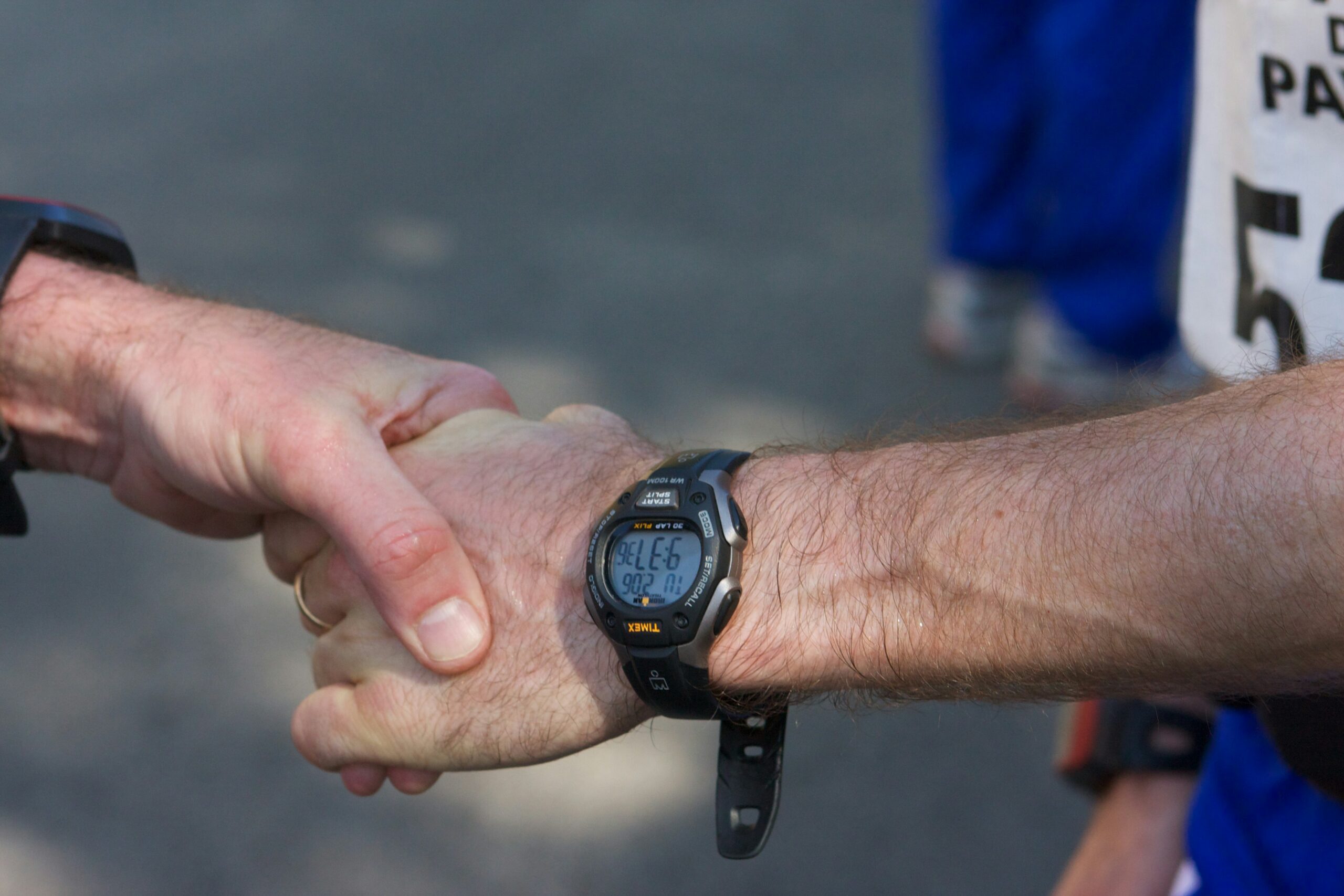
GPS watch. A watch that tracks pace, distance, and ideally heart rate will make training significantly easier. You need to know if you’re running your easy days at an easy pace and your tempo runs at a tempo pace, and perceived effort alone is not reliable enough for most beginners. A midrange watch like the Garmin Forerunner 255 or the Coros Pace 3 is more than sufficient and will last you for years.
Body glide or anti chafe balm. Apply this to thighs, underarms, and nipples before every long run. Chafing is not something you notice until mile 8 or 9, at which point it’s too late. This is a small investment that prevents a disproportionate amount of suffering.
Running socks. Moisture wicking, seamless technical socks. Cotton socks will give you blisters. Running specific socks will not. The difference is meaningful.
Energy gels or chews. You’ll need these for long runs over 75 minutes. Practice with different brands to see what your stomach tolerates. GU, Maurten, Gu Roctane, and Honey Stinger are all popular, but everyone’s gut reacts differently, so test early and often.
Nutrition for Half Marathon Training
Nutrition for half marathon training is simpler than most people think, but there are a few principles worth following to make sure you’re fueling your training properly and recovering well.
Day to day eating
Eat enough to support your training. Half marathon training burns more calories than most beginners expect, and under eating leads to fatigue, poor recovery, and increased injury risk. Focus on whole foods with a balance of protein, carbohydrates, and fats. Lean proteins like chicken, fish, and eggs, complex carbohydrates like oats, rice, and potatoes, and healthy fats from nuts, avocado, and olive oil. Aim to eat within 30 to 60 minutes after finishing a run to kickstart recovery, even if it’s just a snack. A banana with peanut butter or a protein shake with a piece of toast works fine.
Pre run fueling
Eat a small carbohydrate focused meal 2 to 3 hours before long runs and tempo runs. A bagel with peanut butter, oatmeal with banana, or toast with eggs are all good options. Avoid high fiber and high fat foods immediately before running because they sit heavy in your stomach and can cause GI distress mid run. If you’re running first thing in the morning, you can go fasted for easy runs under an hour, but for anything longer or harder, eat something light at least 30 minutes before.
During the run fueling
For runs over 75 to 90 minutes, take in 30 to 60 grams of carbohydrates per hour. One energy gel typically contains 20 to 25 grams of carbs, so plan on taking one every 45 to 60 minutes during long runs. Practice this in training so you know what works for your stomach. Some people tolerate gels well, others prefer chews or real food like dates or pretzels. Find what works for you and stick with it.
Race week nutrition
In the final 2 to 3 days before the race, increase your carbohydrate intake slightly to top off glycogen stores. This doesn’t mean eat twice as much food, it means shift the balance toward carbs and away from fat and fiber. Pasta, rice, bread, and potatoes are your friends. Drink plenty of water and include some sodium to help your body retain fluids. Don’t try any new foods the night before or morning of the race.
Race Day Execution Strategy
The most common mistake first time half marathoners make is starting too fast. The adrenaline, the crowd, the excitement of race day all conspire to make you feel faster and stronger than you actually are in the first mile, and if you let that feeling dictate your pace, you’ll pay for it in the final 5K. Here’s how to avoid that trap and run a smart race.
⚠️ The Golden Rule: Start Slower Than Goal Pace
Your first mile should feel almost too easy. If you’re targeting a 2 hour finish (9:09 per mile pace), your first mile should be closer to 9:30 or 9:40. The energy you save in the first few miles will be available when you need it in miles 10, 11, and 12. Starting conservatively is the single best predictor of a strong finish.
The night before
Eat a normal dinner with an emphasis on carbohydrates, but don’t overdo it. Lay out your race outfit, pin your bib to your shirt, and set out your shoes, socks, watch, and any fuel you plan to carry. Nothing new on race day. Go to bed at a reasonable hour, but don’t stress if you don’t sleep perfectly. One night of mediocre sleep won’t ruin your race.
Race morning
Wake up 2.5 to 3 hours before the race starts. Eat the breakfast you’ve practiced on long run mornings. Drink 12 to 16 ounces of water, but don’t chug a liter or you’ll be stopping to pee at mile 2. Arrive at the race venue 60 to 75 minutes early to allow time for parking, finding the start area, using the restroom, and doing a light 5 to 10 minute warmup jog.
The first 5K
Line up in the appropriate corral based on your goal pace. Do not start at the front if you’re planning to run 9 or 10 minute miles, you’ll get run over by faster runners. The first mile will feel easy because of adrenaline. Let it. Do not speed up just because you can. Stay controlled and settle into a rhythm that feels sustainable. By mile 3, the initial excitement will wear off and you’ll find your actual race pace.
Miles 4 through 10
This is the meat of the race. Settle into a steady effort, take your planned fuel at the intervals you practiced, and drink water or sports drink at every aid station. Don’t skip aid stations thinking you’ll save time, hydration and fueling are what keep you moving in the final miles. If you’re running with a GPS watch, glance at your pace occasionally to make sure you’re not drifting too fast or too slow, but don’t obsess over it. Effort is more important than exact pace.

Miles 11 through 13.1
The final 5K is where your training pays off. This is when people who started too fast begin to slow down dramatically, and people who ran conservatively start passing them. If you’ve followed the plan, you should still have energy left. Use it. Pick up the pace slightly if you can, or just maintain what you’ve been doing. The last mile will hurt regardless, that’s the nature of racing, but it’s a good hurt. When you see the finish line, give it everything you have left. Cross strong.
Frequently Asked Questions
Do I really need to run 12 miles before the race if the race is 13.1?
Yes. Running 12 miles in training gives you the confidence that you can handle the full distance on race day. Some plans cap the long run at 10 miles, which works for some people, but I’ve found that runners who hit 12 miles in training feel significantly more prepared mentally. The extra 1.1 miles on race day is manageable when you’re running on adrenaline with aid stations and crowd support.
What if I miss a week of training?
Missing one week due to illness, travel, or life is not a disaster. Pick up where you left off when you return. Do not try to make up missed mileage by cramming extra runs into the following week, that’s how you get injured. If you miss two or more consecutive weeks, reassess whether your race date is still realistic or if you should push it back.
How do I know if I’m running my tempo runs at the right pace?
Tempo pace should feel comfortably hard. You could manage a few words if someone asked you a question, but you couldn’t hold a conversation. If you use a heart rate monitor, tempo pace is typically 80 to 90 percent of your max heart rate. If you use perceived effort, it’s about a 7 out of 10, where easy is a 4 and all out sprinting is a 10. If you finish a tempo run feeling like you gave everything you had, you went too hard. If you finish feeling like you could have kept going for another 30 minutes easily, you went too easy.
Should I do any cross training?
Cross training is optional but beneficial, especially for injury prone runners. Low impact activities like cycling, swimming, or using an elliptical can give you aerobic fitness without the pounding that running creates. If you want to add cross training, do it on rest days or after easy runs, not before hard workouts or long runs. Yoga and strength training are also valuable for injury prevention, particularly exercises that target hips, glutes, and core.
What pace should I target for the race?
A reasonable goal for a first half marathon is to finish at a pace that’s 20 to 30 seconds per mile slower than your tempo pace. If you’re running 6 mile tempo runs at 8:30 per mile, targeting 9:00 per mile for the half is realistic. If you’ve never raced before, just aim to finish strong rather than chasing a specific time. You can always go faster at your second half marathon.
Can I run a half marathon without doing tempo runs?
Yes, plenty of people finish half marathons on easy mileage alone, but you’ll likely finish slower and feel less prepared than you would if you included tempo work. Tempo runs make you a more efficient runner and give you the ability to sustain a harder effort for longer. If you truly hate tempo runs or find them too difficult, you can replace them with additional easy miles, but you’re leaving fitness on the table by doing so.
What should I do the week after the race?
Rest. Take at least 3 to 5 days completely off from running, then ease back in with short, easy runs for another week. Your body needs time to recover from the race even if you feel fine the next day. Jumping back into training too quickly increases injury risk. Use the week after the race to reflect on what went well, what didn’t, and what you want to do differently next time.
What Happens After Your First Half Marathon
You’ll finish your first half marathon. You’ll be tired, probably sore the next day, and you’ll feel a sense of accomplishment that’s hard to describe to people who haven’t done it. Then you’ll face the question of what comes next. Some people are satisfied with one half marathon and move on to other things. That’s fine. But most people who finish a half marathon want to do another one, and they want to do it faster, or they start thinking about a full marathon, or they just want to keep running because they’ve discovered they actually enjoy it.
The training process is what builds you into a runner, not the race itself. The race is just the culmination of the work you put in over 12 weeks. If you follow this plan, show up consistently, and respect the recovery weeks and easy days, you’ll cross the finish line feeling strong. That’s the goal. Not to suffer through 13.1 miles, but to run them well and finish knowing you were prepared.
I ran my first half in 1:52 and felt satisfied with it because I knew I’d trained properly and executed the race I was capable of running that day. The time didn’t matter as much as the fact that I’d followed through on my training plan and proved to myself that I could do something hard. That’s what your first half marathon will give you if you let it.

About the Author
Matt Renner is the lead editor at Race Pace Review and has been running competitively for over 15 years. He’s completed dozens of marathons since then and he loves diving deep into training data to find out what lead to any of his marginal gains. When he’s not running or analyzing his Garmin stats, he’s probably tinkering with his bike or planning his next race.
📖 Related Articles on Race Pace Review
• 16-Week Marathon Training Plan for Beginners
• 8-Week 5K Training Plan: From Couch to Finish Line
• 10K Training Plan: 8 Weeks to Your Best Race
• Best Running Shoes for Beginners in 2025
• Best GPS Running Watches 2025: Every Budget Covered
• IT Band Syndrome: Causes, Treatment & Prevention for Runners